Here are key tips from our experts to help bus companies optimize their performance during the high season.
The high season is crucial for bus companies, offering an opportunity to maximize revenue and attract new customers. However, this period also brings increased competition and variability in demand, making it essential to have a well-designed strategy that optimizes both the traveler’s experience and the company’s profitability.
Having a comprehensive approach that includes dynamic pricing, digital marketing, and a focus on customer satisfaction can make the difference between a highly successful season and one filled with challenges. To make the most of these opportunities, we’re sharing key tips from our experts to help bus companies optimize their performance during the high season.
Before diving into these strategies, it’s important to identify the main challenges to overcome to implement a comprehensive plan that addresses each critical aspect and achieves goals during peak demand periods.
What Are the Main Challenges to Overcome During the High Season?
Bus companies face significant challenges during the high season, particularly in managing demand and last-minute ticket sales. Saturation can complicate operational efficiency in the face of increased passenger volume, so it’s essential to have robust and scalable eCommerce systems that provide a frictionless experience.
An effective way to anticipate these difficulties is through data analysis, which helps identify destinations and schedules with higher search volumes or purchase intent. This way, companies can adapt their operations and resources based on expected demand, optimizing their responsiveness and enhancing customer satisfaction.
Historical data analysis is crucial for identifying demand patterns based on dates, destinations, and schedules. Companies can use this information to adjust ticket availability, create specific promotions, and adjust rates to attract travelers in advance.–Jose Luis Landaeta, Head of Customer Success at Reservamos SaaS.
According to Jose Luis, to develop an efficient high-season strategy, monitoring several key metrics, such as the average advance purchase time, route occupancy rates, the percentage of cancellations and changes, and customer satisfaction is essential.
Best practices include implementing quick ticketing systems for last-minute tickets, using dynamic pricing to adjust prices in real time, and improving customer service through chatbots or virtual assistants that address frequently asked questions.
It’s also important to measure eCommerce conversion rates, identify high-demand routes, and evaluate the effectiveness of marketing campaigns in driving traffic. These metrics provide valuable insights for refining strategies, ensuring efficient operations, and maximizing revenue.
A great opportunity for companies is to integrate data from all sales channels to optimize their omnichannel strategies. By unifying, storing, and organizing traveler interactions across each sales channel, companies can offer a uniform and personalized shopping experience at all touchpoints. –Jose Luis Landaeta, Head of Customer Success at Reservamos SaaS.
Steps for a High-Season Omnichannel Strategy
1. Plan Your Revenue Management Strategy
During the high season, travel demand is excessive, and bus companies often think that a revenue management strategy means keeping their prices static. However, an optimal revenue management strategy is based on analyzing opportunities to increase the base price, as long as it’s done intelligently.
Mitl García, Revenue Management Consultant at Reservamos SaaS, shares that a strategy that is often very useful is to increase the base price by 5%, especially on routes focused more on vacation destinations, such as beaches or popular tourist spots.
It’s vital to focus on these increases. However, each company should know its regions and know which markets are strong, which are weak, and where there is a need for an incentive, if necessary. My suggestion is to focus on the best routes or high-demand ones because these will have a guaranteed 100% occupancy. That’s where there is an opportunity to raise the base price.–Mitl García Martínez, Revenue Management Consultant at Reservamos SaaS.
Mitl recommends that companies prepare their revenue management strategies about three months in advance, although the lead time will depend on each company. Some companies, for example, load their strategies at the beginning of the year and adjust as they see changes. Others have a lead time closer to the high season.
Revenue management strategies help encourage travelers to purchase in advance. For high seasons, launching strategies early is very helpful because it enables you to measure how many people are buying in advance, thus better managing your offer or extra routes. –Mitl García Martínez, Revenue Management Consultant at Reservamos SaaS.
Mitl emphasizes that revenue management should not be confused with promotions but is an intelligent way of selling. Many factors prevent revenue management from being classified as a promotion.
A promotion will always have an expiration date, whereas revenue management strategies are not created to have an expiration date but to become a way of managing a company’s revenue in a smarter, more dynamic way.– Mitl García Martínez, Revenue Management Consultant at Reservamos SaaS.
With these strategies, bus companies are trying to encourage and create a new purchasing habit through advance purchases, the right channels, reaching the right customer, and offering the right price at the key moment.
2. Define Your Digital Marketing Strategy
During the high season, bus companies can maximize their sales with well-planned digital marketing strategies. It’s crucial to maintain continuous investment throughout the year, adjusting the budget based on demand: increasing investment during high-demand periods and reducing it during low periods.
Additionally, testing different types of advertising campaigns can provide insights into which ones work best and align with traditional search campaigns. By finding those campaigns that yield good results, companies can focus on maintaining them and making them an integral part of their marketing strategy.
Data analysis is an invaluable resource for personalizing campaigns and enhancing customer experience during peak demand. Thanks to historical data, companies can identify high-demand periods and the most requested routes or destinations.
Furthermore, analyzing auction statistics, such as impression volumes, clicks, and click-through rates (CTR), can identify areas for improvement. This information enables companies to tailor their campaigns to respond effectively to travelers’ interests and needs.
To foster traveler loyalty and generate long-term loyalty, bus companies should focus on the customer experience. Conducting surveys to measure the NPS helps understand users’ perceptions of the service, which is essential for implementing improvements. Offering benefits like e-wallets or loyalty points also helps encourage loyalty.
It’s also important to reinforce messages about the benefits of the service and spread them across all channels to strengthen communication. Another good practice is to conduct individual interviews with users to gain an in-depth view of their concerns and further personalize the experience.
3. Strengthen Digital Payment Security and Increase Conversion Rates
The integration of digital payment solutions improves the user experience and increases sales conversion during peak demand seasons.
Most digital payment solutions are designed to be used on mobile devices, making it easy for users to conduct transactions from their phones. This is especially important during the high season, as a large portion of traffic comes from mobile devices. –Pamela López, Head of Finance & Payments at Reservamos SaaS.
With over 450 million mobile phone users, according to Statista, mobile payments have become one of the cornerstones of e-commerce in Latin America and the Caribbean. Specifically, in 2020, the value of such transactions exceeded 38 billion USD in the region, and it is expected to surpass 100 billion by 2025.
Diversifying payment methods, according to Pamela, is also essential for providing convenient options that drive purchases, such as promotions for interest-free months or discounts with specific cards.
Digital payment solutions (like wallets) are often faster and easier to use than traditional payment methods. This reduces the time users spend in the payment process, minimizing frustration and increasing the likelihood of ticket purchases.
It’s important to consider that security is also a crucial part of offering a favorable online shopping experience. Therefore, companies should consider the following for this high-demand season:
Two-Factor Authentication
You can offer the option of two-factor authentication for high-risk purchase attempts. This way, you give customers an option to proceed with their purchase while keeping the transaction secure. An example of this is the 3D Secure protocol, an online payment authentication system designed to enhance the security of electronic purchases made with credit or debit cards. It aims to prevent unauthorized transactions and combat fraud.
Monitoring Suspicious Activities
Implement fraud detection systems that analyze transactions in real time. This includes using algorithms that identify unusual behavior patterns and notify the security team. Alternatively, you can adjust parameter settings based on expectations for the high season, such as a higher purchase frequency and a higher average ticket size.
Ease and Clarity in Refunds
Establish a clear and straightforward process for refunds in case of cancellations or changes. This increases consumer trust and improves the shopping experience by offering greater flexibility.
Pamela mentions that companies should optimize the mobile experience since many users make purchases from their devices. A smooth payment platform with large buttons and simplified forms not only facilitates the purchasing process but also improves customer satisfaction by making each transaction quick and accessible.
The high season represents a valuable opportunity for bus companies to drive revenue and expand their customer base, provided they adopt a comprehensive strategic approach. By managing pricing intelligently, implementing digital payment solutions, and continuously improving the customer experience, companies can effectively adapt to demand challenges and ensure efficient and secure service.
Additionally, monitoring and analyzing real-time data enables for strategy adjustments to maximize profitability. By prioritizing traveler satisfaction and operational efficiency, bus companies can not only respond to the demands of the high season but also establish sustainable practices that strengthen their long-term market position.
Tourism in Latin America is growing, driven by digitalization and the personalization of travel experiences, a key factor for the future.
Latin America has seen a significant increase in international tourist arrivals in recent years. According to data from the World Travel & Tourism Council (WTTC), in 2023, Latin America's travel and tourism sector exceeded the 2019 figure for contribution to the regional economy by US$3.7 billion.
The sector accounted for 7.8% of the regional economy in the same year, contributing US$367.4 billion.
This tourism rebound is driven by several factors, including the relaxation of travel restrictions, the rise of sustainable tourism, and the popularity of destinations combining nature, adventure, and culture.
Latin America has gone from being a niche destination to becoming a magnet for travelers worldwide. Among the most popular destinations, Mexico and Brazil stand out as the countries that have led this growth, attracting international tourists and a growing number of local travelers.
In 2023, tourism accounted for 7.8% of Latin America's regional economy
Tourism trends in the region
The profile of the tourist visiting Latin America has changed over the last decade. Travelers are increasingly looking for personalized experiences, nature getaways, and destinations with a focus on sustainability. In addition, the proliferation of low-cost flights and the digitization of tourism services have facilitated access to many of the region's hidden treasures.
An important trend is the rise of “adventure tourism” and “ecotourism”. Destinations such as the Amazon in Brazil, the Atacama Desert in Chile, and the national parks of Costa Rica have captured the attention of a growing number of travelers seeking closer contact with nature. In addition, iconic cities such as Mexico City, Rio de Janeiro, Buenos Aires, and Lima continue to be cultural and gastronomic attractions.
Another notable trend is the growing demand for “contactless” tourism solutions and the preference for online transactions. According to a Statista report, more than 70% of travelers in Latin America prefer to plan and book their trips online, and that figure continues to rise year on year. This is where bus ticketing and transportation services play a crucial role in ensuring a frictionless experience.
With the changing traveler profile and the amount available about their behavior, bus companies can get to know them better and offer them a personalized ticketing experience.
Data such as the reasons for their trips, who they travel with, what times they prefer to travel, their favorite seats, or their payment method, are just some of the key aspects that, combined with local trends, generate a solid database for bus companies. The data provides insight into where the user is in the process, from their first interaction to their next purchase.
This information not only helps improve service but also enhances the personalization of the online shopping experience, making it closer, more efficient, and tailored to the specific needs of each user.
For example, in Reservamos SaaS, when a user interacts with the eCommerce of one of our partners, the system can automatically adjust the information displayed on the website, offering a unique experience in each search and digital purchase process. The digital purchase experience for a traveler located in Mexico City will be vastly different from that of a traveler in Lima or any other city in Latin America.
+70% of travelers in Latin America prefer to plan and book their trips online
Mexico and Brazil: the favorites in the tourism industry
In terms of growth and popularity, Mexico and Brazil are positioned as the tourism giants in Latin America. In 2023, Mexico reported the arrival of more than 40 million international tourists, consolidating its position as one of the top destinations worldwide.
By 2024, Mexico will be positioned as the favorite international destination for leisure and business travel, surpassing even Caribbean destinations such as Jamaica, Aruba, and the Dominican Republic, according to data from Marriott International's Travel Trends Forecast study in the Caribbean and Latin America (CALA).
Mexico is positioned as the favorite international destination for business and leisure travel.
The diversity of its tourism offer, ranging from the beaches of the Mexican Caribbean to the cultural richness of its colonial cities, has made Mexico a favorite for foreign and local tourists.
On the other hand, Brazil has once again captured the attention of tourists worldwide. Rio de Janeiro's Carnival, the beaches of Copacabana, and the Amazon rainforest are just some of the attractions that have kept Brazil on the wish list of many travelers, especially attracting a new type of tourist: those interested in conservation and ecotourism.
Both countries have not only proven to be attractive destinations. Still, they are also leading the way in adapting technology to meet the growing demand for tourism services, where the sale of transportation tickets, especially bus tickets, plays a central role.
The importance of being prepared for demand
This tourism boom presents a significant challenge for service providers. As more travelers seek digital solutions to plan their trips, transportation companies, particularly bus lines, must accelerate their capacity for innovation to be ready to meet demand.
The role of the bus in Latin America's tourism industry is essential, due to its territorial extension, and mainly because the bus remains the most accessible and used means of transportation in the region.
+90% of travel in Mexico is by bus
In Brazil, bus routes connect cities and regions that do not have airline coverage, making this service a fundamental pillar of tourist transportation. In addition, many of the region's most popular attractions are not located near major airports, making the bus the best option for travelers.
Is your eCommerce ready to deliver digital shopping experiences that match each traveler's needs?
The role of online bus ticket sales
Online bus ticketing has become a crucial element in meeting the needs of modern travelers. Digitizing the purchasing process allows users to plan their trips more efficiently, access promotions and discounts, and avoid long lines at bus stations.
The ease and convenience of purchasing tickets from bus companies' direct digital sales channels also helps gain insights that help operational teams detect opportunities to improve the customer experience, increase revenue, and reduce costs across the entire operation.
This is where Reservamos SaaS plays a key role. As a pioneer in integrating technology solutions for online bus ticketing, Reservamos SaaS helps bus companies improve their digital operations and deliver a personalized experience to each traveler.
Through the use of artificial intelligence and real-time data analytics, companies can offer their travelers a personalized shopping experience by being tailored to their individual needs.
In addition, Reservamos SaaS technology enables bus companies to anticipate market demands, adjust their prices dynamically, and improve customer satisfaction by personalizing the online experience. This not only boosts sales but also enhances traveler loyalty by delivering efficient, high-quality service.
The growth of tourism in Latin America is creating new opportunities for bus companies and tourism service providers. To remain competitive, they must adopt technology solutions that facilitate digital ticketing and offer a personalized online experience to travelers.
The future of tourism in Latin America is digital, and companies that embrace this evolution will be better positioned to capitalize on the sector's boom.
In this sense, the Reservamos SaaS technology ecosystem helps companies accelerate their innovation to optimize the way they interact with their travelers and prepare for the digital future throughout the region.
Reservamos SaaS Next demonstrated how AI-based personalization and real-time data enhance the online bus ticket purchasing experience.
On September 5th, the first edition of Reservamos SaaS Next took place, a key event to share with the bus sector in the Latam region our commitment to personalization that makes the online experience unique for each user.
During the online event, the multiple innovation possibilities offered by the use of data to personalize the online purchasing experience for users when they buy their bus tickets through bus companies' digital channels were discussed. One of the main topics was how companies can optimize interaction with their customers by using generative artificial intelligence (AI) and real-time data to generate unique and personalized experiences.
Reservamos SaaS aims for the system to learn from each user's interactions and improve the next experience, turning each visit into an opportunity to offer an even more personalized service. The vision is that, instead of always displaying the same standard information, eCommerce becomes dynamic, changing according to the traveler’s location, timing, needs, and behavior.
Additionally, the potential of applying these advancements to digital platforms and all interaction channels, such as customer support, was highlighted. The possibility for a support agent to know the details of the trip the customer is planning enables for more efficient and personalized service, generating trust and loyalty.
Personalization as the future of online shopping experiences
Much of Reservamos SaaS's work has focused on improving the user experience, especially on mobile devices.
Adrián Cuadros, Chief Product Officer of Reservamos SaaS, recalled how mobile apps became an essential requirement during the pandemic when many consumers were forced to purchase digitally. However, Adrián emphasized that what used to be a competitive advantage—having a good mobile app—has now become an essential requirement and necessity. The most successful companies have stood out by optimizing the user experience at every digital touchpoint, and the future lies in personalization.
Adrián exemplified that it used to be enough to present travelers with the necessary information to make their purchase on the eCommerce platform as simple as possible. However, today, we have access to more information that helps us better understand the eCommerce user. reasons for traveling, who they travel with, their travel schedules, preferred seats, and payment methods. This information, combined with trend data and local events, allows for creating a database that enhances personalization in the purchasing experience, making it closer, more efficient, and faster.
What is the purpose of this personalization database? Its value lies in the fact that when a traveler interacts with the eCommerce of one of our partners or their apps, the content adapts to each user. Instead of displaying the same page, like a printer repeating the same newspaper, the site changes based on the traveler’s characteristics. For example, the experience for someone in Mexico City will be very different from that of a person in another city, or the experience of a traveler in Bogotá will be different from someone in Lima or any other city in Latin America. – Adrián Cuadros, Head of Product for Reservamos SaaS.
Adrián mentioned that routes and discounts vary, and essentially the entire funnel changes. This depends on both the user's location and the time they visit a partner's eCommerce. For example, the experience of a first-time user today will be very different from someone returning in three days while already in the middle of planning their trip.
According to Adrián, bus companies must evolve toward a more personalized purchasing experience by using the data and interactions their users already make within their eCommerce platforms. This includes information such as preferred destinations, favorite schedules, seat preferences, and payment methods to ensure more efficient, closer, and relevant purchasing funnels.
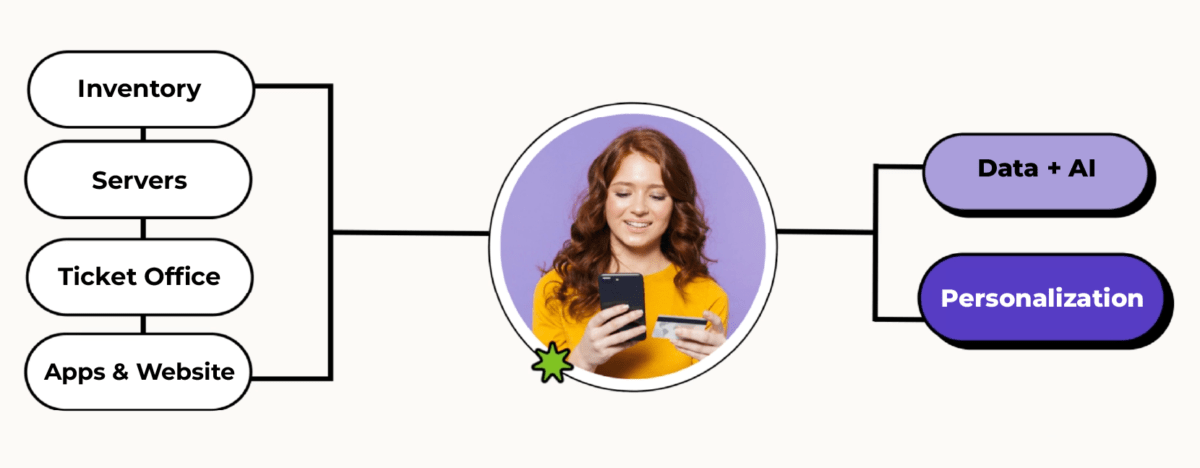
This is why Reservamos SaaS's ecosystem has been designed to allow companies to take advantage of this data, offering users an experience tailored to their individual needs, whether through mobile apps, websites, or even support channels like chat and phone.
Another key point of the event was the importance of evolving the direct channel of bus companies. This not only increases customer loyalty but also opens the door to greater revenue opportunities and reduced operating costs, especially when combined with advanced technology such as artificial intelligence.
So join us in discovering the new features that Reservamos SaaS offers for both enterprise and small businesses, to increase revenue while providing a better shopping experience for your travelers.
New functionalities of Reservamos SaaS
During Reservamos SaaS Next, we presented new functionalities and launches focused on personalization for all. These innovations enable bus companies to maintain competitiveness and enhance their market position by anticipating travelers' needs, improving operational efficiency, and boosting customer satisfaction.
Personalized funnel
We undertook the task of investigating the main challenges that travelers encounter when making an online purchase and suggested personalized solutions to address them.
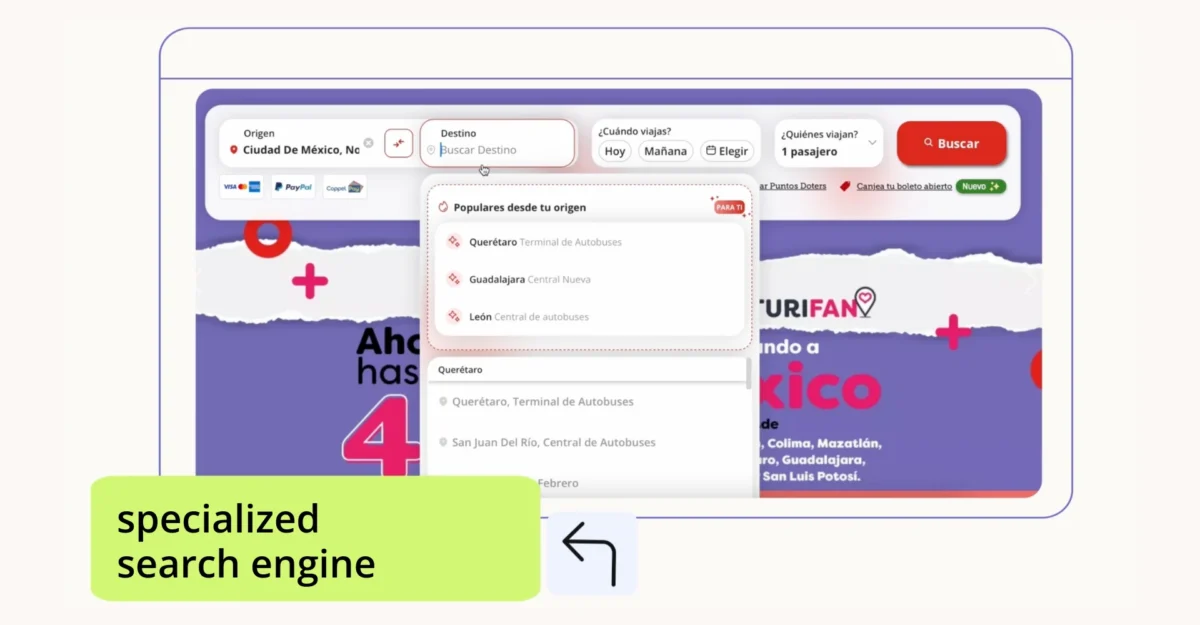
To achieve this, we started with the search widget, which is an intelligent search engine that takes into account recent searches, and popular destinations, and has an autofill function. In two clicks, the traveler can begin their trip search for today, tomorrow, or a specific date. They can also find the destination they are looking for quickly and easily thanks to the intuitive, data-driven design.
Additionally, we redesigned the results page, highlighting the most important information for users: schedule and price. We integrated tags with:
Recommended trips, where the funnel learns from each search and becomes personalized over time.
Popular trips, based on other users' searches.
Cheapest and fastest trips.
To make the purchasing process simpler and more efficient, we enabled seat selection and availability directly from the results screen. Users can explore available seats for each schedule, so we added:
A checkmark to let the user know which options they've already reviewed.
Customizable options to add the return trip in one click.
Pre-filled passenger data.
Favorite payment method based on user behavior.
For bus companies, this innovation not only improves the user experience within their own eCommerce platforms but also:
Increases conversion rates thanks to faster and more efficient navigation.
Raises the average ticket by offering additional options like the return trip.
Provides a robust data architecture to better understand users and continuously optimize the shopping experience in their eCommerce platforms.
Chatbot
The Reservamos SaaS Chatbot connects directly to WhatsApp and enables users to search for trips using natural language, generating a direct purchase link that takes travelers to the eCommerce platform of our partners to complete their purchases.
It’s the perfect assistant for all traveler queries. From resending the digital ticket more easily to providing information and answering questions about available services.
With a simple setup within the eCommerce platform, bus companies have access to an assistant capable of providing 24/7 support to their travelers. This positively impacts their business by:
Reducing operating costs.
Speeding up service with instant responses.
Boosting satisfaction and loyalty through personalized and fast service.
ReservamosOne
Users interact with bus companies in multiple ways, but without a system capable of storing that data, companies lose the ability to analyze it to better connect with their travelers.
ReservamosONE is an intelligent system that unifies a user's interactions across the various sales channels a bus company has, whether online or offline, to help companies make informed, strategic decisions based on data.
With this data stored and organized, bus company operations teams can access it to gain insights that lead to actions that solve specific problems or answer key questions.
With ReservamosONE, bus companies can discover the different interactions a traveler has with their brand to ensure unique shopping experiences tailored to what the traveler needs.
Price Suggestion
The Price Suggestion Module, integrated with our Revenue Management System, enables bus companies to analyze historical data on their company and competitors to suggest intelligent pricing strategies, all automatically.
This module analyzes historical data using sales, occupancy, price, and demand information from the last four weeks. It generates accurate demand curves to assign dynamic prices based on forecasted purchases.
With this tool, operations teams can eliminate manual strategies by automating dynamic price allocation, allowing them to anticipate changes in demand more efficiently and quickly. This way, the company can:
Adjust prices based on real-time demand and occupancy.
Respond quickly to market changes to maximize revenue.
Each suggested strategy has a calculated risk level that increases the company's revenue.
The Price Suggestion Module not only optimizes revenue but also reduces the time and effort required to manage prices, maximizing income through dynamic, accurate pricing, and simplifying price management by reducing the manual workload.
The future of personalization
Adrián also discussed a key trend for the future of eCommerce: the development of multiple specialized artificial intelligences in different areas. Instead of relying on a single omnipotent AI, companies will have AIs that are experts in specific niches, such as bus travel management.
This vision aligns with Reservamos SaaS's commitment to offering advanced solutions that help its partners remain competitive in a constantly evolving market.
The first edition of Reservamos SaaS Next made it clear that the future of eCommerce is focused on data-driven personalization. That's why every solution integrated into our technological ecosystem is aligned with this approach, ensuring that partner companies have what they need to evolve their operations and face future challenges and opportunities.
Bus companies that, regardless of their size, take advantage of this potential will not only improve their users' experience but will also be able to optimize their revenue and strengthen their competitive position in an increasingly digital and demanding market.
Optimize revenue and occupancy with Reservamos SaaS Intelligent Alerts. Monitor prices, routes, and competitors in real-time to make strategic decisions.
Every bus company needs to monitor the market closely and track factors such as price changes and occupancy on each route and schedule. Having the right tools can help operational teams broaden their perspective to design and implement pricing strategies more quickly and make the difference between meeting growth goals and falling behind in the process. Proper market monitoring is key to ensuring efficient and profitable operations for your company.
However, this exercise can undoubtedly be complex, time-consuming, and require significant resources from your team, potentially leading to missed growth opportunities. At Reservamos SaaS, we specialize not only in strengthening your digital sales channels but also in providing the most suitable tools to help your company efficiently and effectively monitor market changes, keeping you ahead of the competition.
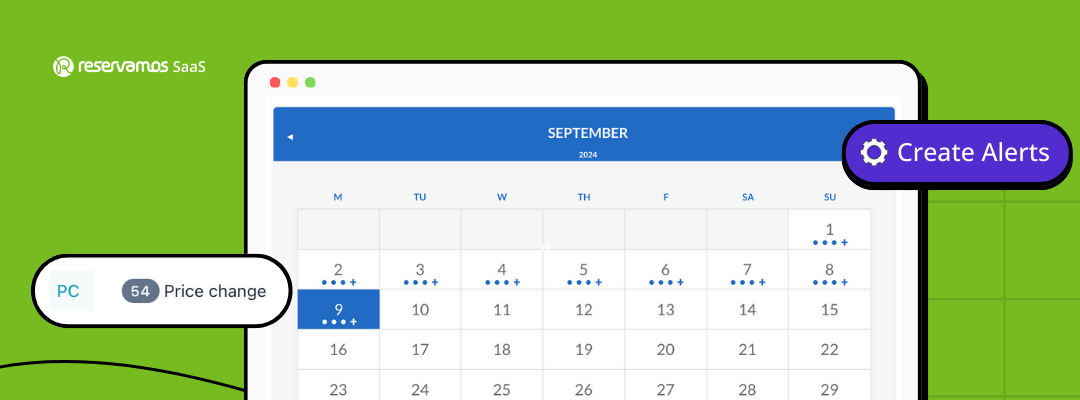
The Intelligent Alerts and Recommendations module, integrated into our Revenue Management System, enables you to set up all kinds of notifications to monitor your market in real time. One of its latest features includes the ability to create alerts by partners within a competitor's OTA or Marketplace that you choose to monitor.
This new functionality addresses the need to monitor and create alerts for each available partner within an OTA’s webpage. This way, your company can receive notifications about price and occupancy changes for a specific competitor within an OTA. Regardless of the breadth of an OTA or Marketplace's offerings and the number of competitors it includes, your company will be able to closely track each one of them.
Other key features of this module include:
- Mass data download: In addition to having a calendar and text summary of occupancy and price alerts within the Revenue Management System, this feature allows you to download the compiled data in an Excel file.
- Configuring and activating alerts for occupancy and price changes: This facilitates the creation and activation of alerts for occupancy and price changes to monitor the market.
- Alert file download: Enables the bulk download of active alerts, allowing your company to take action based on its needs.
- Email download delivery: The downloaded file is also sent to the email of the user who performed the download.
The precision in real-time data collection and analysis provided by the Revenue Management System through its various modules is the key to optimizing your company’s operational capacity. It enables your teams to focus on identifying opportunities, adjusting prices, and increasing occupancy quickly, thereby meeting travelers' changing demands.
With the Revenue Management System from Reservamos SaaS, and particularly with the Intelligent Alerts module, your bus company can make more informed decisions and always stay one step ahead in a constantly changing market. In this way, you not only optimize occupancy and revenue but also strengthen your company’s competitive position in the market
Optimize revenue and pricing with the Revenue Management System from Reservamos SaaS. Monitor the market and adjust strategies in real-time.
In the competitive world of passenger transportation, properly managing operations and optimizing pricing strategies can make the difference between growing your business and leaving revenue opportunities on the table. With the Revenue Management System from Reservamos SaaS, bus companies can increase their revenue thanks to a data-driven solution that centralizes all the necessary information to make strategic and effective decisions.
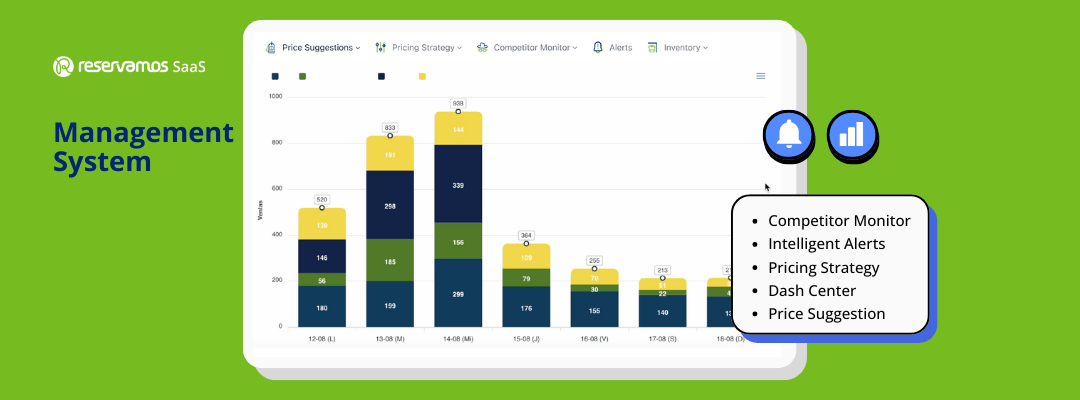
This advanced system offers precise and quick answers to the most complex questions companies face about their markets. With a modular structure, the system enables you to monitor and analyze market behavior, receive intelligent alerts about supply changes, evaluate the performance of implemented strategies, and generate intelligent pricing recommendations to maximize revenue.
The modules that make up the Revenue Management System are:
- Competitor Monitor
- Intelligent Alerts
- Pricing Strategy
- Dash Center
- Price Suggestion
Below, we detail the functionalities of each of the five modules to help your company make data-driven decisions.
Revenue Management System Modules
1. Competitor Monitor
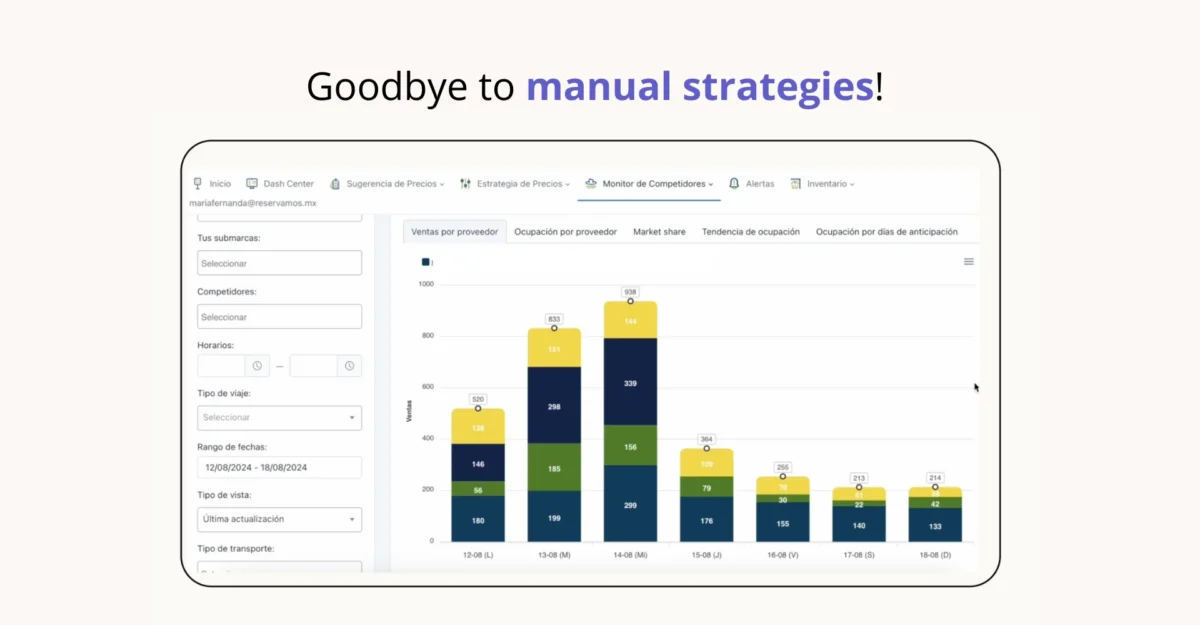
Powered by machine learning, this module enables companies to obtain a strategic view of the market. It analyzes data such as routes, schedules, occupancy, and pricing, providing critical information that enables businesses to anticipate the competition and adjust pricing and inventory strategies on time.
It's used by pricing analysts, data analysts, operations managers, and sales and marketing managers, among other bus company staff, to access updated and automatic market information, such as routes, schedules, occupancy, capacity, and prices. This complete visualization helps make better pricing strategies and inventory optimization decisions.
2. Intelligent Alerts
Set up automatic notifications to receive information about changes in revenue, routes, occupancy, and other critical market variables. This enables companies to respond to market fluctuations and keep their strategies optimized quickly.
One of the latest features includes creating alerts by partners within a competitor OTA or Marketplace you choose to monitor. This new functionality addresses the need to monitor and create alerts for each partner available on an OTA's website.
Other key features include mass data downloads, setting and activating alerts by occupancy and price changes, downloading alert files, and sending downloads via email.
3. Pricing Strategy
Enables companies to efficiently generate and manage dynamic pricing strategies, significantly reducing operational times. This module also facilitates mass uploads of strategies, price adjustments, and quick deactivation of discounts.
Additionally, this module includes a new feature, Trip List, designed to revolutionize how bus companies manage pricing and make strategic decisions.
The Trip List is a tool that provides a general and comparative overview of fares and availability on different routes and schedules, all in one easy-to-consult table.
4. Dash Center
This dashboard offers a clear and up-to-date visualization of key performance indicators, such as revenue, average ticket, and occupancy. It is a key tool for measuring the impact of implemented pricing strategies and adjusting operations in real-time.
With this tool, bus companies have access to graphs with the following indicators:
- Total revenue
- Daily revenue for the period
- Average ticket
- Daily average ticket for the period
- Tickets sold
- Daily tickets sold for the period
- Tickets per trip
- Average tickets sold per trip
- Advance sales
- Sales with days of anticipation
- Average days of anticipation
- Trips
- Average revenue per trip
- ASK (Seats offered per kilometer traveled)
- RASK (Occupied seats per kilometer traveled)
5. Price Suggestion
Based on historical sales, occupancy, and demand data, this module suggests dynamic prices to optimize revenue without manually designing strategies. It's ideal for anticipating demand fluctuations at specific times.
The Price Suggestion Module enables the Revenue Management System to generate strategies suggested to the bus company for approval based on controlled risk levels.
With these modules, the Reservamos SaaS Revenue Management System not only improves operational efficiency but also enhances companies' ability to quickly adapt to market conditions. This, in turn, increases revenue and improves purchase anticipation and occupancy for each route and schedule. In short, it is the comprehensive solution every bus company needs to stay competitive in a constantly changing market.