Discover how one-click purchasing transforms the digital experience for bus companies, reduces friction, and boosts conversion rates.
For years, digitalization consisted of opening an online sales channel. Having a website where passengers could purchase tickets was enough to talk about innovation. Today, that capability is taken for granted and no longer represents a competitive advantage.
The digital experience has become an extension of the transportation service itself. The speed at which a traveler finds their route, the clarity of the information, and the ease of choosing a departure time or completing a payment are part of the quality of the service just as much as punctuality or travel comfort.
This transformation is not happening only in ground transportation. According to McKinsey & Company, companies in the travel sector must expand their concept of customer experience to include the digital environment as an integral part of the service, as travelers expect consistent, seamless, and personalized journeys before, during, and after the trip.
The experience begins long before boarding a bus: it begins with the passenger's first click.
Amazon did not change retail; it changed expectations
The major technology companies understood long ago that the best purchasing experience is not the one that offers more options, but the one that eliminates unnecessary steps.
Amazon revolutionized ecommerce with experiences such as 1-Click. The goal is not only to speed up the purchase, but to allow users to continue exactly where they want without having to start over. That same principle is beginning to transform other industries.
That expectation is no longer limited to retail. It has also reached ground transportation: when a passenger searches for a bus ticket, they expect an experience that is just as intuitive, fast, and reliable as the one they find on the digital platforms they use every day.
The same happened with Uber, which eliminated the need to look for cash or explain a destination, and with Booking.com, which turned searching for and comparing accommodations into an intuitive and personalized experience.
The result is a phenomenon known as the "Amazon Effect": the expectations created by digital leaders eventually extend to completely different industries. Consumers expect fast, intuitive, and reliable processes, regardless of the product or service they purchase.
For a ground transportation company, this means that a passenger no longer evaluates only whether they found the departure time they needed. They also evaluate how much effort it took to find it.
Companies that reduce customer effort during an interaction generate higher levels of loyalty than those that simply seek to surprise customers with extraordinary experiences, according to Gartner research.
Loyal users generate up to 9.8X more revenue than a casual user. At Reserhub, we evolve the purchasing experience to reduce friction at checkout and turn repeat usage into loyalty, creating experiences that increase the long-term value of every traveler.
The smartest purchase is the one that requires no effort
The most innovative technology companies have demonstrated that reducing effort during the purchasing process has a direct impact on conversion and loyalty. However, speed alone is not enough. A truly intelligent experience must also offer flexibility.
Reserhub Commerce continuously evolves its experience. With My Profile, frequent travelers can save their information, including passenger details, payment methods, and travel preferences. Each purchase stops being an isolated process and becomes the beginning of a relationship with the digital channel.
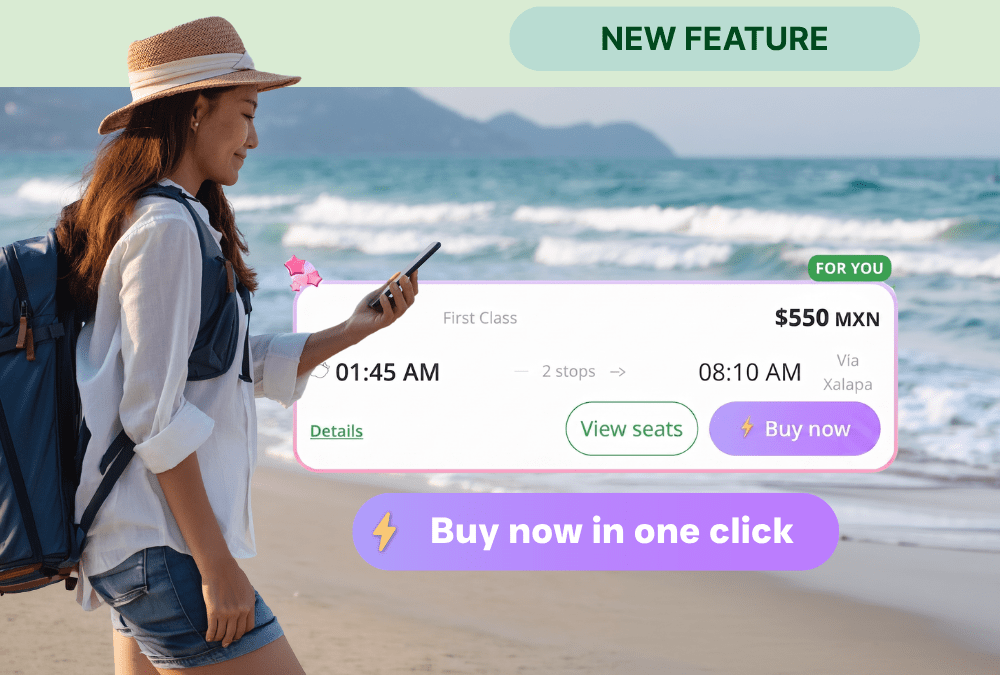
Building on that foundation, Buy Now in One Click was created, an experience designed to help recurring passengers purchase again with as little effort as possible.
When a traveler who already has a purchase history or has set up My Profile returns to the ecommerce platform, they can access Buy Now in One Click directly from the results page.
In a single step, the traveler finds their seat preselected and, if they have created an account, their preferred payment method as well, achieving up to 3 times higher conversion. In addition, they can now change their seat or update passenger information directly within the same flow, without leaving the screen or restarting the purchase.
Buy Now in One Click is already spontaneously adopted by one in three eligible users. Every completed purchase represents a revenue opportunity that could previously have been lost during checkout.
More than simply speeding up a transaction, Buy Now in One Click turns the traveler's history into a competitive advantage for the direct channel. Each repeat purchase requires fewer steps, reduces friction, and delivers a faster experience while maintaining control at all times.
Because loyalty does not begin with a rewards program. It begins when purchasing again becomes so simple that the passenger no longer has to start from scratch.
Now, in addition to preloading passengers, payment methods, and preferences, travelers can also review and modify their seats or update passenger information without leaving the fast flow or restarting the entire process.
Buy Now in One Click, available to all our clients through their direct channels, is designed to eliminate unnecessary effort without compromising the passenger's ability to make decisions.
Until now, if the system preselected a seat that the traveler wanted to change, or if passenger information needed to be updated, the traveler had to leave the fast flow and return to the conventional purchasing process. As a result, the very benefit of a more seamless experience was lost.
For bus companies, regardless of their size, this means having an owned channel that incorporates one of the most widely adopted ecommerce capabilities and sets a new standard for ground passenger transportation.
While others start from scratch with every purchase, Reserhub leverages the traveler's history so that the second, third, or tenth purchase is practically automatic.
The advantage of the direct channel lies in knowing the traveler
Experiences such as Buy Now in One Click represent a fundamental difference between an owned channel and marketplaces or OTAs.
While an intermediary only knows the current transaction, a bus company's ecommerce platform knows the passenger's entire relationship with the company. It knows their frequent routes, preferences, and purchase history. That knowledge makes it possible to build experiences that make purchasing again increasingly easier.
The second purchase should not feel the same as the first. If a company already knows its traveler, its ecommerce platform should demonstrate that as well.
That is why capabilities such as Buy Now in One Click turn passenger history into a competitive advantage for the direct channel. Each repeat purchase requires less effort, strengthens the relationship with the user, and reduces the need for the traveler to search for other alternatives.
The digital experience is already part of the transportation service. Discover how bus companies can adapt to the New Passenger Experience.
For many years, transportation companies understood that their service began when passengers boarded a vehicle. The experience was measured by punctuality, travel comfort, or the quality of service during the journey. However, travelers' expectations have changed.
Today, the first interaction with a bus company takes place several steps before passengers arrive at a terminal: it begins when someone opens a website, searches for a route, and decides whether that process inspires enough confidence to continue.
The digital experience has evolved from being merely a sales channel into an extension of the transportation service itself. The ease of finding a trip, the speed at which available options are presented, and the clarity of the purchasing process all shape the perception passengers develop of a brand. In other words, the journey no longer begins when passengers board the bus; it begins with the very first search.
This transformation is not exclusive to ground transportation. In the tourism industry, leading companies have recognized that the discovery and booking experience has a direct impact on travelers' decisions.
A joint analysis by McKinsey & Company and Skift indicates that users seek platforms capable of simplifying discovery and booking through intuitive processes, relevant recommendations, and frictionless journeys because the quality of that experience directly influences their choice of provider.
The digital journey begins with a search
Most e-commerce optimization strategies focus on checkout, payment methods, or reducing cart abandonment. However, the purchase decision begins much earlier.
When travelers perform a search, they are already sharing valuable information. The origin they select, the destination they explore, the dates they compare, or even the searches they abandon all represent clear signals of their travel intent. These interactions make it possible to understand how they make decisions and identify where the greatest friction points arise during the purchasing process.
The real shift is that this information is no longer used solely to generate reports or analyze results at the end of the month. Today, it can be used in real time to create a simpler, more relevant, and more efficient experience from the very first click.
According to McKinsey, travelers may interact with dozens of digital touchpoints before completing a booking. Throughout that journey, they constantly switch between devices, compare alternatives, and expect every interaction to be consistent. Each of those moments influences the final purchase decision.
The search widget is the first moment of the experience
For years, an e-commerce search engine was viewed as a form whose sole purpose was to capture an origin, a destination, and a travel date. Today, its role is very different.
The search widget represents the first moment when a company can demonstrate that it understands its passengers' needs. It is where the digital experience begins and where the effort required to find a trip can be reduced.
At Reserhub Commerce, the search widget was designed with this principle in mind. Rather than simply collecting information, it interprets purchase intent from the very first interaction to create a faster, more intuitive, and more personalized journey.
For example, geolocation automatically identifies the most convenient departure terminal based on the user's location, eliminating unnecessary steps from the very beginning of the process.
Intelligent autocomplete suggests destinations as passengers type, using real behavioral and demand data to speed up the search process and reduce input errors.
Likewise, recent searches allow travelers to revisit previously searched routes without repeating the entire process, while popularity-based sorting makes it easier to compare the most relevant options.
Each of these capabilities serves a common purpose: reducing the effort users need to make to move forward with their purchase.
The best personalization is the one that eliminates effort for the user
Personalization is often associated with marketing campaigns or specific promotions. However, one of its most valuable applications takes place long before a transaction occurs.
Personalization means anticipating travelers' needs and simplifying their decisions. When an e-commerce platform remembers previous searches, prioritizes the most relevant routes, or presents first the options most likely to match the user's intent, it is not showing more information; it is eliminating complexity.
This trend can also be observed in other industries. Platforms such as Booking.com use browsing history to present recommendations aligned with users' previous behavior, while Expedia has incorporated artificial intelligence-powered assistants to facilitate trip planning and booking. The objective is not to offer more alternatives, but to help users make decisions with less effort.
In ground transportation, the challenge is the same: transforming the search process into an experience that supports passengers from the very first moment and reduces friction throughout the entire purchasing journey.
All the information generated throughout the purchasing process is an opportunity to better understand travelers and offer them a much more personalized experience. If we know how to interpret that data, we can build a stronger relationship with users so they continue choosing our digital channel. That is the real challenge of technological transformation: it is not just about having information, but about knowing how to use it to create better experiences for passengers while, at the same time, making companies more competitive. — Virginia Olalde López-Gavito, Executive Director of CANAPAT
Data Creates Value When It Improves the Experience
Every interaction within an e-commerce platform represents an opportunity to learn from traveler behavior. However, data only becomes valuable when it helps improve the purchasing experience.
Behind the Reserhub Commerce search widget is SysIQ®, Reserhub's technology that transforms the signals generated throughout the digital journey into intelligence capable of continuously optimizing the passenger experience.
Every search, every click, and every purchase help the system identify behavioral patterns, better understand travel intent, and facilitate future decisions. The objective is not simply to know more about users, but to use that knowledge to deliver a purchasing process that is increasingly faster, more intuitive, and more reliable.
Technology is no longer just a collection of isolated features. It becomes a capability that continuously learns and improves with every new interaction.
Every company has a different opportunity to leverage the data generated by its operations. Some have been doing so for years to understand demand and make decisions about new routes or services. However, today the true potential goes far beyond that. Data makes it possible to design better user experiences, identify friction points during the purchasing process, and respond more precisely to what travelers truly need. User experience has become a strategic priority for transportation companies, and those that know how to transform that information into better decisions will be better prepared to compete. — Virginia Olalde López-Gavito, Executive Director of CANAPAT
The digital evolution of ground transportation is no longer just about selling tickets online. The real challenge is building experiences capable of meeting the expectations that travelers develop every day as they interact with digital platforms in other industries.
The companies that will lead this next stage will not necessarily be those offering the greatest number of features, but those that understand that the digital experience is part of the transportation service and that every search represents an opportunity to strengthen passenger trust.
Because the first impression of a journey no longer happens when passengers board a bus. It happens the moment they decide to search for their next destination.
Discover how SysIQ®, the intelligent search system that powers Reserhub Commerce, optimizes searches, personalizes the experience, and turns visits into ticket sales.
The future of e-commerce in the ground passenger transportation sector does not lie solely in adding more features or incorporating new digital tools. Sustainable growth of the direct digital channel depends on something much deeper: the ability to build intelligent experiences that understand traveler behavior and reduce the effort required to complete a purchase.
The most competitive companies do not stand out because they have more technology, but because they have systems capable of interpreting purchase intent, anticipating needs, and optimizing decisions in real time. In an environment where every click can bring a user closer to or further from conversion, the digital experience becomes a decisive factor for revenue.
It is under this vision that SysIQ ® was created, the system designed by Reserhub to transform every digital interaction into a sales opportunity.
What is SysIQ ®?
SysIQ ® is the intelligence layer that powers Reserhub Commerce. Its function is not only to operate the digital channel, but also to connect data, user behavior, availability, pricing, and payments to build more seamless, relevant, and efficient purchasing experiences.
More than an isolated feature, SysIQ ® acts as the intelligent engine behind the digital experience. The system continuously learns from traveler interactions to identify behavioral patterns, optimize journeys, and reduce friction throughout the conversion funnel.
Every search, every route viewed, every click, and every completed payment process generates signals that feed the system. Based on this data, SysIQ ® dynamically adapts the experience to simplify and accelerate the purchasing decision, thereby increasing the likelihood of conversion.
Because personalization is no longer an additional feature within e-commerce. It is a competitive advantage that increases user loyalty within the direct digital channel.
The First Digital Journey Defines All the Ones That Follow
In ground transportation, the first online purchase has a much greater impact than it may seem. It is not only about completing a sale, but about building the trust necessary for travelers to choose the digital channel again in future purchases.
The initial experience functions as a silent onboarding process, where users constantly evaluate whether the platform is fast, intuitive, and trustworthy. From the first search to the payment stage, every interaction influences the perception of security and ease of use.
When the process feels complex, slow, or unclear, even small points of friction can lead to abandonment. But when the experience flows naturally, the digital channel is no longer perceived as a challenge and begins to become a purchasing habit.
That is why SysIQ ® is designed to interpret traveler intent from the very first moment. Variables such as origin, destination, date, trip type, and browsing behavior make it possible to dynamically optimize the experience and better support users throughout their journey.
The goal is not only to improve conversion metrics, but to build experiences capable of generating trust from the very first digital interaction.
From Data to Revenue: The Power of Personalization
Most e-commerce platforms collect data. Few truly transform it into smarter experiences.
SysIQ ® turns information into decisions capable of directly impacting conversion and revenue. The system uses intelligence layers designed to reduce user effort and facilitate the purchasing process from the very first click.
One of these capabilities is intelligent search, which incorporates geolocation functions to automatically suggest the most convenient departure terminal based on the traveler’s location. This helps reduce failed searches, minimize manual corrections, and create a cleaner funnel from the beginning of the experience.
This is complemented by intelligent autocomplete within the search widget, capable of suggesting destinations as users type based on real behavior and demand data. In addition to accelerating the start of the search, this functionality helps prevent typing errors and guides passengers toward routes with higher purchase intent.
SysIQ ® also optimizes decision-making through intelligent travel recommendations. The system analyzes variables such as trip duration, price, preferred itineraries, and previously viewed ticket categories to display more relevant options based on the user's context.
In addition, seat visualization directly within the results facilitates navigation and helps transform searches into purchases more efficiently. Each of these elements is designed to reduce uncertainty and make the digital experience feel simpler, more intuitive, and more personalized.
From Operational Ecommerce to Intelligent Ecommerce
Traditionally, many companies have viewed their e-commerce platform as a transactional channel whose primary function is to enable ticket purchases. However, the most advanced digital platforms no longer operate solely as sales systems but as commercial intelligence environments capable of continuously adapting to user behavior.
In other industries, solutions such as Dynamic Yield have redefined the way brands understand personalization and digital experiences. Their value was not only in automating recommendations but in building systems capable of interpreting user signals to optimize decisions in real time.
SysIQ ® represents that evolution for the bus industry. The technology makes it possible to understand moments of greater purchase intent, identify behavioral patterns, and dynamically optimize the experience to better support passengers throughout the entire funnel.
This means e-commerce stops reacting and begins anticipating what users need.
Every interaction feeds a system that continuously learns from real traveler behavior to build more efficient and relevant experiences over time.
The Future of Transportation Is Built With Commercial Intelligence
The digitalization of ground transportation no longer depends solely on having an online presence. The real challenge lies in building digital experiences capable of generating trust, facilitating purchases, and transforming data into strategic decisions.
The companies that will lead the future of the sector will be those that understand e-commerce not only as a sales channel, but as a commercial intelligence capability capable of connecting experience, personalization, and revenue.
SysIQ ® was created precisely to address this need. Its purpose is not only to operate an e-commerce platform, but to turn every visit into a conversion opportunity and every interaction into a source of continuous learning.
That is why SysIQ ® is not just technology. It is the intelligence that powers more seamless experiences, smarter decisions, and more visits converted into tickets sold.
Discover how digital payments in e-commerce drive conversions in Latin America by reducing friction, building trust, and optimizing the user's payment experience.
Years ago, e-commerce growth was explained by variables such as price, product availability, or logistics efficiency. However, in markets like Latin America, where digitalization progresses at uneven speeds, there is a less visible but more decisive factor: trust. In this context, digital payments have evolved from being merely an operational layer to becoming a critical point in the user experience and, in many cases, the main enabler or inhibitor of conversion.
Without a doubt, payment is considered the most critical stage of the online purchasing process. 59% of digital shoppers abandon their cart when their preferred payment method is not available, according to the study Behind the Click: The Ecosystem That Sustains E-commerce in LATAM, conducted by Endeavor.
Globally, according to the Endeavor report, merchants accept an average of four to five payment methods, reflecting the demand for options from more mature digital consumers. However, only 38% of adults in the region have access to digital financial services, which represents a massive opportunity.
The biggest barrier to e-commerce is not price; it is distrust
One of the most common mistakes in digital strategy is assuming that the main barrier to completing a purchase is price. Evidence in the region suggests otherwise. A significant proportion of users abandon the purchase process at the payment stage, even after showing clear purchase intent. This behavior does not necessarily respond to an economic evaluation, but to a perception of risk.
The biggest pain point is at the end of the funnel: when you did everything right, and the payment fails.— Jorge Cabrera, Commercial Director at Mercado Pago in Mexico.
Uncertainty about transaction security, the possibility of rejection, or lack of clarity in the process are factors that create friction and erode user trust in a matter of seconds. In this sense, the decision not to pay is not rational, but preventive: in the face of doubt, the user abandons.
Digital payments: from infrastructure to experience
For a long time, digital payments were approached as a technical component within the digital ecosystem. Their function was to operate correctly, remain invisible, and not interfere with the experience. Today, this view is limited. Payments not only process transactions, but they also communicate trust.
Today, the user does not wait. If they cannot complete a purchase in 5 seconds, they leave. Every friction point in the payment process is a lost opportunity and a customer who does not return.— Vadim Danko, Business Development Manager for Riskified LATAM and founder of LATAM Commerce.
This means that every element of the payment process, from the selection of the payment method to the final confirmation, is part of an experience that must be designed with the same level of detail as any other user touchpoint.
A company’s ability to convert depends, to a large extent, on its ability to reduce the perception of risk at this critical moment.
Why does a slow payment process impact more than a high price?
The relationship between user experience and abandonment becomes especially evident in the payment process. While price can be evaluated, compared, or even justified by the user, friction in the payment process generates an immediate response that is difficult to reverse.
A slow process, with multiple steps or unclear errors, raises doubts about the platform’s reliability. Each additional second not only increases the likelihood of abandonment but also weakens the perception of professionalism and security.
In this context, optimizing the payment process is no longer an incremental improvement; it becomes a direct lever for conversion. Reducing load times, simplifying flows, and offering clarity at each step are decisions that directly impact business outcomes.
A user can complete the entire purchase process, but if the payment fails or is complex, the sale is lost.— Jorge Cabrera, Commercial Director at Mercado Pago in Mexico.
Direct relationship between purchase experience and abandonment
User experience in the payment process is one of the most underestimated factors in e-commerce strategy. However, its impact is profound, especially in markets where digital trust is still being established.
Elements such as clarity in messaging, the availability of relevant payment methods, and transparency in potential errors improve the experience and reduce uncertainty. When a user understands what is happening and what to expect, the perception of risk decreases significantly.
In this sense, checkout design should focus not only on efficiency, but on building certainty. The experience should leave no room for doubt. — Jorge Cabrera, Commercial Director at Mercado Pago in Mexico.
Digital payments in LATAM: between opportunity and friction
The Latin American context presents a high-potential but complex scenario. The diversity in levels of financial inclusion, the coexistence of multiple payment methods (such as Pix, Dimo, Yape, and Bre-B), and the incidence of fraud create an environment where each transaction involves a delicate balance between conversion and security.
The challenge for transportation companies is not only to offer more payment methods, but to support the transition to digitalization, understanding the structural limitations of each market. — Jorge Cabrera, Commercial Director at Mercado Pago in Mexico.
Companies operating in the region must not only facilitate payments but also actively manage associated risks. This involves implementing antifraud strategies that do not penalize conversion and optimizing approval rates without compromising the security of the ecosystem.
Transactional trust: the KPI you’re not measuring
Traditionally, the performance of digital payments has been measured through isolated indicators such as approval rates or fraud levels. However, this fragmented approach limits the understanding of their real impact on conversion.
In practice, these indicators are deeply interconnected and should be analyzed as part of a broader system: transactional trust. This concept integrates three key dimensions (approval, security, and experience) and helps explain how they interact to influence the user’s final decision.
When one of these variables fails, the others are affected. Excess friction reduces conversion, an increase in fraud leads to more declines, and a poor experience weakens the perception of security. Only when these dimensions are managed in an integrated way is it possible to build an environment that supports sustained conversion.
The balance that drives growth
The challenge is not choosing between conversion and security, but finding a balance where both can coexist. Companies that achieve this balance are those that understand payments as a strategic capability, not just an operational function.
Optimizing approval rates, reducing fraud, and designing seamless payment experiences are not independent goals; they are components of a single strategy aimed at strengthening user trust.
Digital payments have evolved from being a technical component to becoming a central factor in the customer experience.
That is why the future of ground transportation does not depend only on selling more tickets, but on making the payment process easier. Simplifying the final stage of the funnel is one of the most effective ways to improve conversion, average ticket size, and the overall passenger experience.
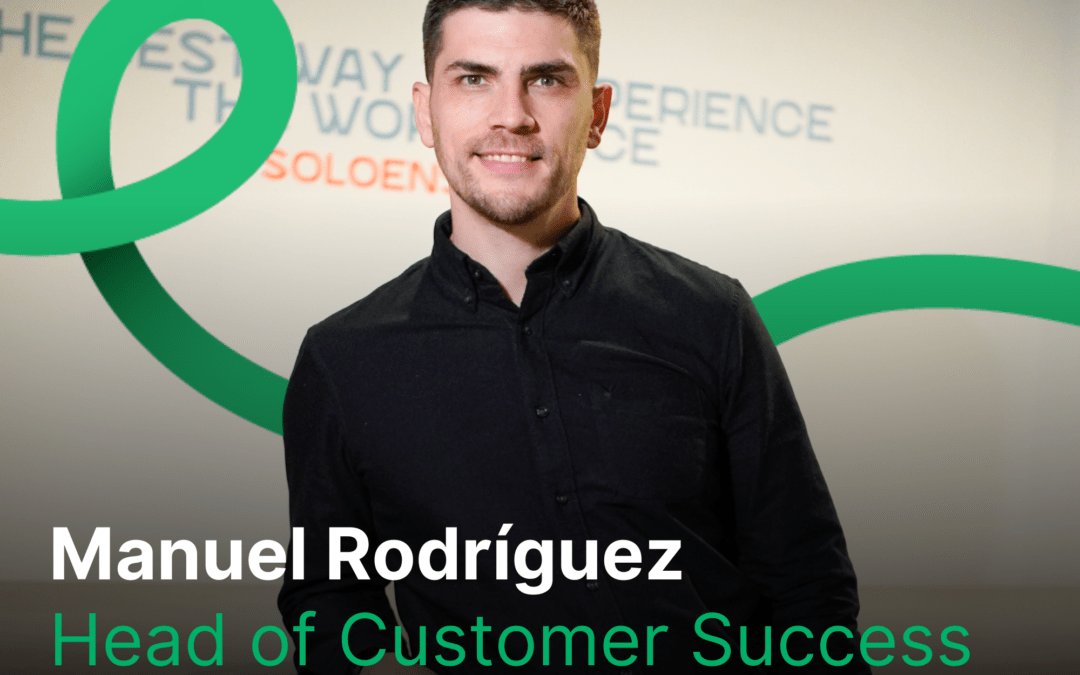
Learn about Manuel Rodríguez's vision and what lies ahead in this new phase at the helm of a team whose goal is to strategically support bus companies throughout the region.
At Reserhub, technology is only the starting point. The real impact happens when innovation is supported by strategic guidance that translates into tangible growth for our clients.
Today, we announce that Manuel Rodríguez assumes the role of Head of Customer Success, with the mission of strengthening the strategic support we provide to all companies that trust our ecosystem across Latin America.
Manuel brings more than 18 years of experience in companies and consulting firms specializing in marketing, strategic planning, and business development. He holds a Bachelor’s degree in Advertising, a Master’s degree in Internet Business, and a Design Thinking certification.
His career integrates strategic vision, digital expertise, and execution skills, which are crucial for helping bus companies thrive in a competitive, data-driven market.
The Industry Challenge: Competing in a Digital-First Environment
Digital transformation in ground transportation across Latin America is no longer a trend; it is a structural reality.
According to Manuel, the “uberization” of the economy has redefined traveler expectations. Today, bus companies not only compete with each other but also with digital-native models where online experience, traceability, and personalization are at the core of the value proposition.
The competitive landscape is no longer purely operational; it is now digital, traceable, and data-driven. New players and aggregators are building direct relationships with travelers, capturing information, and optimizing every interaction. — Manuel Rodríguez, Head of Customer Success at Reserhub.
In this context, digitalization is no longer an additional channel. It is the infrastructure that enables bus companies to understand and support travelers before, during, and after their journey through their direct digital sales channels.
The digital channel is where traceability, customer insight, and continuous improvement are truly built. — Manuel Rodríguez, Head of Customer Success at Reserhub.
However, transformation is not only technological, but is also cultural. It requires developing internal capabilities, empowering change leaders, and aligning the organization around a digital-first vision. Adapting processes, mindset, and structure is just as important as implementing tools.
Why Bus Companies Choose Reserhub as a Technology Partner
For Manuel, choosing Reserhub goes beyond software.
Reserhub is a company that has strategically focused its e-commerce technology to enhance the digitalization of bus companies’ sales, aiming to make the direct digital channel their primary growth engine.
Results in Mexico, Colombia, Peru, and Brazil demonstrate that Reserhub Commerce optimizes conversion, enhances the purchasing experience, and increases retention. Yet the difference lies not only in the product, but in how we support clients in transforming data into decisions and sustainable growth.
Reserhub is not just an online sales tool; it is an ecosystem that converts traffic into transactions and data into decisions. — Manuel Rodríguez, Head of Customer Success at Reserhub.
Customer Success as a Value Generation System
Manuel’s vision is that Customer Success is not a post-sales function; it is a structural system for value generation.
It is the bridge between the product promise and the real business outcome. I see Customer Success as a central pillar of innovation and growth, not traditional Account Management.— Manuel Rodríguez, Head of Customer Success at Reserhub.
This new phase will focus on:
Transforming the team into strategic consultants rather than reactive managers.
Measuring and managing Customer Health through clear indicators.
Feeding the product roadmap with real market pain points.
Turning feedback into innovation.
Connecting digital performance with financial results.
According to Manuel, Customer Success must become the system that transforms the use of Reserhub’s solutions into measurable growth: more digital sales, higher retention and recurrence, more digitalized travelers, and greater operational efficiency for our clients.
When our clients grow, the product improves. And when the product improves, the market chooses us. — Manuel Rodríguez, Head of Customer Success at Reserhub.
With this appointment, Reserhub reinforces its commitment to strategically supporting bus companies throughout the region, ensuring that technology is not only implemented but transformed into a competitive advantage and a driver of long-term evolution for ground transportation companies.